Thursday, 19 February 2015

Save the Date: 8-April-2015 - Dustin Bajer!

The Highlands Garden Club is proud to announce: We're hosting a talk featuring Dustin Bajer!

Save Wednesday, April 8th from 7-8 p.m. for a trip to Bellevue Hall at 7308 -112 Avenue to hear the "teacher, permaculturalist, master gardener..." speak.  

All are welcome.  More details to come.  Stay tuned!  

Friday, 13 February 2015

Quick Plant saves time?

Dollar stores are starting to stock garden supplies.  Look what I found!


The Quick Plant boasts it makes planting cell packs "5 Times Faster".

I don't buy many annuals and I have a trowel that seems to do the job, so this patent pending plastic "popsicle" made me laugh. 

But for those of you who do plant annuals - what do you think?  Is this tool heaven sent?  :)

Thursday, 12 February 2015

Five-Plant Gardens -- Perennial Garden Design (by the book)

Nancy J. Ondra's 2014 book, "Five-Plant Gardens: 52 Ways to Grow a Perennial Garden with Just Five Plants", promises easy gardening using just five perennial plants.

Pretty plants that come back year after year?  Sign me up!  But, can it really be that easy?
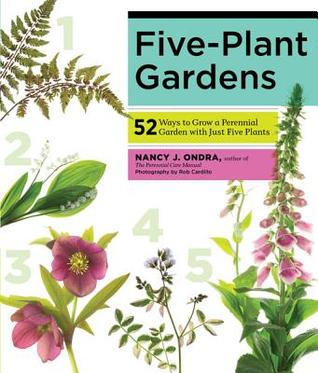
Ondra advises to start small ("Admire large gardens but plant small ones"), shop smart (begin with 5" pots- plants will grow and spread), and get in the zone (USDA Plant Hardiness).  Her enthusiastic writing is energising and everything is kept simple.  The "five plants", however, refers to five types of plants -- sometimes more than one of each kind is required.

Overall thoughts:
This is a well thought out and very pretty book.  It hits the right notes with me, a beginner gardener - providing lots of information, sensible advice, and inspiration for more.  The "first choice" plants include zone 3 (good for Edmonton) and plenty of advice on how to substitute for those that aren't.  The plant photos are particular favourites - especially those in seed in the "For the Birds" and "Winter Wonderful" gardens. Best of all, it's available at EPL!

The book is divided into two main parts: "Five-Plant Gardens for Full Sun to Partial Shade and "Five-Plant Gardens for Partial to Full Shade".  (See * for additional info on the book's structure.)

Pros:
  • Simple designs can be tiled and combined to expand your garden over time or to fit around structures (such as a porch or pathways) 
  • Gardens are themed: colours, bloom time, attracting / deterring wildlife, usage (e.g. cuttings, scent)
  • Includes plant alternates (named and general e.g. "Another 6- to 12-inch-tall perennial with white flowers, such as wall rock cress..."), so you can substitute as needed and still keep the original garden's look 
  • Includes a "Season by Season" summary and "Digging Deeper" section for each garden with what to expect, how to care for plants, and how to use the garden
Cons:
  • Nothing bad, just some limitations: Plant care in the long run not addressed ("Many perennials can live for 3 to 5 years with hardly any attention..." what afterwards?), is a "plant-by-numbers guide" doesn't teach principles of design.  
  • Table of Contents lists garden names without specific page numbers
Bee-Friendly:

The book doesn't have a Bee-Friendly focus, but does indirectly incorporate some bee-friendly features:
  • Uses bee-friendly plants (full of pollen and nectar, or native) e.g. Echinacea purpurea (coneflower), Monarda (bee balm), rudbeckia (Black-eyed Susan), sedum,  and gives enough information for you to substitute your choice of bee-friendly plants
  • Multiple plants of the same kind are grouped together - xerces.org advises planting the same flower in clumps to attract bees.  This could be because bees harvest from one type of flower at a time and locate flowers using sight -- mass plantings are easier to see find and would allow for maximum food collection on each trip.
-------------------------------------------------------------------------
* Each garden includes:
- A planting plan
- A moisture requirement scale (Dry, Average, Moist)
- A pretty illustration of the garden
- Photographs of the plants on a plain background
- A shopping list for plants (with suitable alternatives)
- A "Season by Season" summary on what to expect in the garden and how to care for the plants
- A "Digging Deeper" section ideas and suggestions (such as how to incorporate annuals into the specific plan or where it might be especially suitable)

Wednesday, 11 February 2015

Books, Bulbs, and Plans -- February's Meeting

The wind was cold, but it was warm at the Highlands Community Hall!

The second Club meeting of the year had members planning events and sharing seed catalogues, library books on bees, and chocolate covered acai berries.

Business done, we talked gardening.  

Gisele was the lucky recipient of some tulip bulbs over Christmas, but what to do with them with the ground frozen solid?

We brainstormed some ideas including:
1. Force them to bloom inside (Yay, a bit of early spring indoors!)
2. Plant them in planters and store in the garage - prevents the bulbs from drying out and once spring comes, the whole planter can be brought out for display.


Margaret had brought the extras from the Club's fairy garden project and a number of "Growing and Using..." booklets (A Storey Country Wisdom Bulletin) from Audrey.

If you're looking for something to do with chives (you probably have no trouble growing them), sage, tarragon or thyme, or how to make paper from scented geraniums - these are just thing for you!

Deb found there are two Seedy Sunday events in the area this year and shared their speaker schedules (click to enlarge schedule photo):

  • 22-Mar-2015: Edmonton Seedy Sunday 2015 (Alberta Avenue Community Hall)


  • 29-Mar-2015: Seedy Sunday in the Park (Salisbury Greenhouse, Sherwood Park)  
There are bee-friendly speakers at both: We just might have to go out together. 

Carded! Daffy for Garden Club

Our new membership cards are here!


Twenty-five years and five-hundred annual memberships later, the Club needed a new batch of cards.  Over the winter, we sourced quotes, created a new design, and put in an order with local company Black Cat Press.
Clockwise from left: Gisele, Lori, Ollie, Lana and Erica.
See how happy members are?  Get yours at the next meeting or social gathering.  Memberships are still just $15 per year.

Monday, 9 February 2015

Talk & Tour: Rob Sproule at Salisbury Greenhouse

Kicking off this year of Bee-Friendly learning and gardening events, we're heading out to Salisbury Greenhouse!

Rob Sproule* will be talking about bee-friendly plants, bee-friendly gardens, and pest management at the greenhouse, while giving us a tour the facilities.  

Interested in joining us?  Meet Sunday, 15-February-2015 at 1 p.m. (1 km south of Wye Road on RR 232 (Brentwood Blvd)) for the Talk & Tour, or contact us at highlandsgardenclub@gmail.com to arrange carpooling.  
---------------------------------------------------------------------
* The gardener, writer, and Edmonton Journal columnist introduced many to the problem of neonics and the plight of the bee in his 04-June-2014 Edmonton Journal article Making a safe place for the bees.

Monday, 2 February 2015

Clean Start: Organic Seeds

While browsing seeds at the store and in catalogues have you been looking for organic* seeds?
With the organic gardening and farming movement gaining popularity, organic seeds are starting to show up in the stores, albeit in small numbers and limited types (usually herbs).

In contrast, local retail source, Apache Seeds, stocks many organic and heirloom varieties seed lines, and their selection is currently at it's highest.

Earth's General Store, doesn't have their organic seeds yet (as of 02-Feb-2015), but should by March. (Other organic and sustainable gardening tools, however, are available.)

Does your favourite seed company have organic varieties?  How do you get them? 

----------------------------------------------------------------------------------------------

* Organic Certification doesn't mean "pesticide-free", but does mean no synthetic pesticides have been used.  Neonics are synthetic systemic pesticides, so seeds from plants that have been treated with neonics cannot be certified organic.

Organic pesticides are generally not systemic: Penn State University has listed "none have systemic activity" as being a limitation of organic pesticides and Oregon State University's "Profiles of Natural Pesticides" only lists one (Azadirachtin, a Neem derivative, as being systemic at root, and mildly systemic in leaves).  This is a good thing for our Bee-Friendly goals: even if the parent plants were treated with the organic pesticide, it would not have persisted to the seeds and next generation of plants.